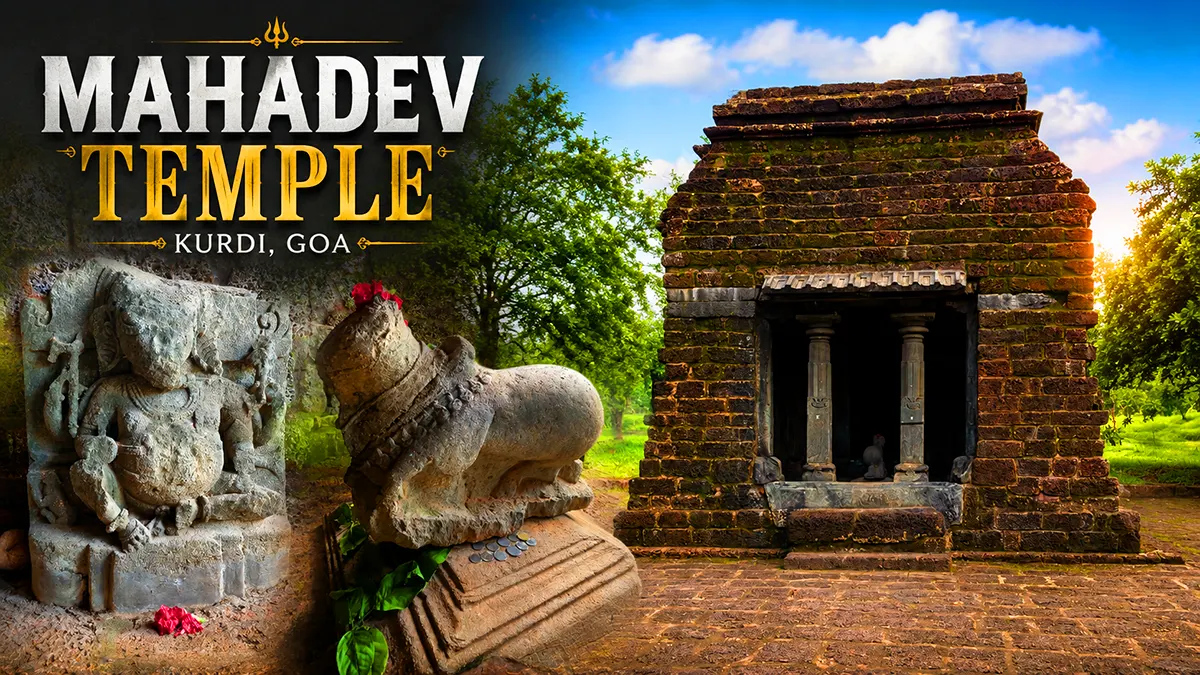
Hidden amidst the peaceful surroundings of South Goa, Mahadev Temple Kurdi is one of the most fascinating ancient temples in the state. Unlike most temples, this centuries-old shrine has an extraordinary history it was carefully dismantled, stone by stone, and reconstructed at a new location to save it from disappearing underwater.
Today, the temple stands as a remarkable example of heritage conservation and showcases the architectural brilliance of the Kadamba period.
Table of Contents
Where is Mahadev Temple Kurdi Located?
Mahadev Temple Kurdi is presently located in Kurdi, Goa. However, this is not its original location.
The temple originally stood about 17 kilometers southeast in Kurdi Angod, on the banks of the Netravali River. When the Salaulim Dam project threatened to submerge the entire area, archaeologists and conservation experts decided to preserve this priceless monument.
The temple was carefully dismantled and reconstructed at its present site, which was selected to closely resemble the original natural surroundings and topography. This remarkable relocation ensured that an important part of Goa’s cultural and architectural heritage would survive for future generations.
History of Mahadev Temple Kurdi
Mahadev Temple is believed to date back to the 10th–11th century A.D. during the rule of the Kadamba dynasty, one of Goa’s most influential medieval kingdoms.
The temple is dedicated to Lord Shiva and originally housed a sacred Shiva Linga as its main deity. Today, the original Shiva Linga is preserved and worshipped at the Someswara Temple in Kurdi Angod.
Although the temple no longer houses its original deity, it continues to be admired for its historical significance and exceptional stone craftsmanship.
Architecture of Mahadev Temple
Mahadev Temple is a fine example of Dravidian-style temple architecture with influences from the Kadamba period.
The temple consists of:
- A square Garbhagriha (sanctum).
- A porch (Mandapa) situated in front of the sanctum.
- Construction using both laterite and basalt stone, materials commonly used in ancient Goan temples.
Despite its relocation, the temple still retains many of its original architectural details.
Beautiful Entrance to the Sanctum
One of the most impressive features of the temple is the entrance to the Garbhagriha.
The doorway contains three Dwara Shakhas (door frames) with an intricately carved image of Lord Ganesha placed at the Lalatabimba, the central portion above the doorway.
Above the lintel is a beautifully carved architrave featuring five niches, separated by decorative pilasters. Although the seated figures inside these niches have been damaged over time, they still hint at the artistic excellence of the temple’s original sculptors.
The entrance is further decorated with:
- Female devotee sculptures on both sides of the doorway
- Kirtimukha carvings above the threshold
- A finely carved Chandrasila
- Decorative Shankhavarta motifs
These artistic elements reflect the high level of craftsmanship achieved during the Kadamba period.
The Temple Porch
The front porch is supported by two beautifully carved pillars.
Each pillar features:
- A square-shaped base
- A fluted shaft
- Elegant petal-shaped carvings
- A square capital
- Decorative Kirtimukha carvings near the top
These pillars not only support the structure but also add elegance to the temple’s appearance.
Exterior Design
The outer walls of Mahadev Temple display carefully planned architectural detailing.
The moulded base consists of:
- Upapitha
- Adhisthana
- Jangha
- Pattika
The wall sections feature a central Bhadra flanked by decorative Kuta and Nagara Shikhara motifs, separated by linear pilasters carved into laterite blocks.
These balanced proportions and decorative carvings give the temple an elegant appearance and are characteristic of the Dravidian architectural style.
Why is Mahadev Temple Kurdi Special?
Mahadev Temple is unique because it represents both ancient history and modern heritage conservation.
Instead of allowing the monument to be submerged during the construction of the Salaulim Dam, experts painstakingly documented every stone, dismantled the structure, and rebuilt it at a safer location while maintaining its original layout and appearance.
This successful transplantation has made Mahadev Temple one of Goa’s finest examples of archaeological preservation.
Also Check 12 Jyotirlinga in Goa
Best Time to Visit
The temple can be visited throughout the year. However, the monsoon season (June to September) transforms the surrounding landscape into lush greenery, making the area especially scenic. Winter, from November to February, also offers pleasant weather for sightseeing.
Visitor Information
- Location: Kurdi, South Goa
- Original Location: Kurdi Angod on the banks of the Netravali River
- Dedicated To: Lord Shiva
- Architectural Style: Dravidian
- Period: 10th–11th Century A.D.
- Dynasty: Kadamba Dynasty
- Current Status: Relocated and reconstructed heritage temple
Mahadev Temple Kurdi is much more than an ancient Shiva temple. It is a remarkable symbol of Goa’s rich cultural heritage and the successful preservation of an irreplaceable historical monument.
Its detailed stone carvings, Kadamba-era architecture, and extraordinary story of relocation make it a hidden gem worth exploring. Whether you are interested in history, archaeology, temple architecture, or simply discovering lesser-known places in Goa, Mahadev Temple Kurdi offers a unique glimpse into the state’s glorious past.