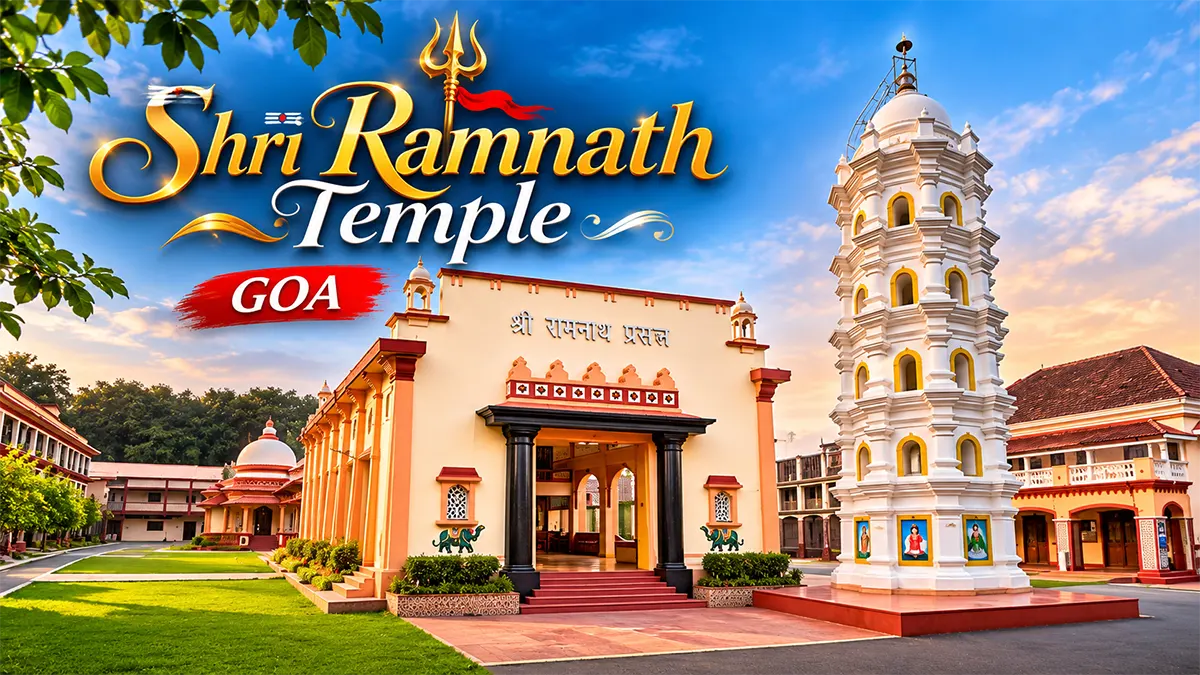
Located in the peaceful village of Bandora (Bandivade), near Ponda in Goa, Shri Ramnath Temple, also known as Ramnathi Temple or Shree Ramnath Devasthan, is an important Hindu temple celebrated for its rich history, distinctive architecture and deep spiritual significance.
Dedicated to Lord Ramnath, a form of Lord Shiva, this historic temple is known for its magnificent five-tiered Deepstambha, spacious pillarless assembly hall, beautifully decorated shrines and centuries-old religious traditions.
For many families across India and abroad, Shri Ramnath Devasthan holds an even more personal significance as their Kuladevta (ancestral family deity) temple.
During our visit, we explored the temple’s grand entrance, main sanctum, sacred shrines and surrounding courtyard. In this guide, we’ll take you through its fascinating history, architectural features, religious significance and everything worth exploring during your visit.
Table of Contents
Watch Our Complete Shri Ramnath Temple Goa Video Tour
Experience the beauty and spiritual significance of Shri Ramnath Devasthan in Ramnathi, Ponda, Goa, through our detailed temple tour.
In this video, we explore the magnificent five-tiered Deepstambha, the sacred shrine of Lord Ramnath, the beautiful Sabhamandap, and the temples dedicated to Goddess Kamakshi, Goddess Shanteri, Shri Betal and Shri Kalbhairav.
You’ll also discover the temple’s distinctive architecture, traditional courtyards and lesser-seen features of this historic religious complex.
Watch the full temple tour below and explore Shri Ramnath Temple with InstantTrips.
History of Shri Ramnath Temple in Goa
One of the most fascinating aspects of Shri Ramnath Temple is the story of how its sacred deity came to be worshipped at the present location.
The original temple of Lord Ramnath was situated in Lotli, now known as Loutolim, in South Goa.
During the Portuguese period, religious persecution created serious challenges for Hindu temples and their worshippers. To safeguard the deity and preserve their religious traditions, devotees moved Lord Ramnath from Loutolim to Bandivade.
At that time, Bandivade was outside Portuguese control, making it a safer location for the deity.
This relocation became an important chapter in the temple’s history, reflecting the determination of its devotees to protect their faith and traditions.
Over the centuries, the temple continued to develop into an important religious and cultural centre.
Today, Shri Ramnath Devasthan stands as a reminder of Goa’s spiritual heritage and the enduring connection between generations of devotees and their ancestral deities.
Who Is Lord Ramnath?
Lord Ramnath is worshipped as a form of Lord Shiva.
According to Hindu religious tradition, the name Ramnath is associated with Lord Rama and his worship of Shiva.
The legend connects Lord Rama’s devotion to Shiva with the events following his victory over Ravana.
The temple’s own tradition also explains Shri Ramnath as a symbol of the unity of Hari and Hara — Lord Vishnu and Lord Shiva.
This connection gives the temple a distinctive spiritual significance, bringing together two important traditions of Hindu worship.
The main sanctum houses the sacred Ramnath Shivalinga, which remains the central focus of worship.
Why Shri Ramnath Devasthan Is an Important Kuladevta Temple
For numerous Hindu families, particularly those with ancestral connections to Goa, Shri Ramnath holds special importance as their Kuladevta.
A Kuladevta is an ancestral family deity whose worship is passed down through generations.
For such families, visiting Ramnathi Temple is not simply a pilgrimage. It is also a way to maintain their connection with family history, traditions and religious identity.
Devotees travel to Shri Ramnath Devasthan from different parts of India and overseas to offer prayers and seek blessings.
This continuing relationship between the temple and its devotees makes Ramnathi an important centre of religious and cultural heritage.
Architecture of Shri Ramnath Temple: What Makes It Unique?
One of the most striking features of Shri Ramnath Temple is its distinctive Goan architectural character.
Unlike many traditional North and South Indian temples known for towering stone shikharas or elaborate gopurams, Ramnathi Temple displays architectural features associated with Goa’s regional building traditions.
Its sloping tiled roofs, decorative arches, spacious halls and prominent tower reflect the diverse influences that have shaped Goan temple architecture.
Several details make this temple especially interesting for visitors.
1. The Magnificent Five-Tiered Deepstambha
The most recognizable architectural feature of Shri Ramnath Temple is its impressive five-tiered Deepstambha, or traditional temple lamp tower.
Standing prominently in the courtyard, this beautiful white structure has multiple levels decorated with arched niches and intricate architectural details.
At its base are painted representations of Hindu saints.
Deepstambhas are an important element of Goan temple architecture and are traditionally associated with the lighting of oil lamps during religious festivals.
The Deepstambha at Ramnathi is particularly impressive because of its height, proportions and position within the temple courtyard.
It is also one of the best features to photograph when exploring the temple exterior.
2. The Spacious Pillarless Sabhamandap
Another remarkable feature is the temple’s Sabhamandap, or assembly hall.
Unlike many traditional temple halls, the Sabhamandap at Shri Ramnath Temple does not have supporting pillars interrupting its central space.
This creates an unusually open interior, offering visitors a clear view across the hall.
The temple also features traditional decorative elements, including a swastika floor design and a large ceremonial drum.
The combination of spacious interiors and traditional details contributes to the temple’s distinctive character.
3. The Octagonal Temple Tower
From the outer pathways, visitors can observe the temple’s impressive multi-level tower above the main shrine.
Its octagonal form, layered architectural detailing and dome-like crown give the building an appearance that differs from many conventional Hindu temple towers.
The surrounding sloping roofs and arched windows add to the distinctive character of the complex.
Together, these features demonstrate how Goan temples developed an architectural identity influenced by regional Hindu traditions and wider cultural exchanges.
4. The Grand Mahadwar and Courtyard
The journey into the temple begins through an ornate entrance known as the Mahadwar.
Decorative lion sculptures flank the entrance, while the staircase leads visitors into the spacious temple courtyard.
Inside, the main temple building, towering Deepstambha and surrounding structures create an impressive setting.
The complex also includes traditional decorative motifs, elephant reliefs and architectural details that reward a closer look.
Deities and Shrines Inside Shri Ramnath Devasthan
Although Lord Ramnath is the principal deity, several other important deities are worshipped within the temple complex.
The temple follows a Panchayatan tradition, involving the worship of five principal deities: Shri Ramnath, Shri Laxminarayan, Shri Shanteri, Shri Kamakshi and Shri Siddhinath.
Additional shrines and associated deities also form part of its religious traditions.
Lord Ramnath and the Sacred Shivalinga
The main sanctum is dedicated to Lord Ramnath.
The shrine features elaborate silver ornamentation and beautifully decorated doors.
According to the Government of Goa’s description, the silverwork on the inner sanctum doors includes religious scenes depicting the worship of a Shivalinga and Lord Vishnu with Goddess Lakshmi.
These artistic details add to the spiritual and cultural importance of the main shrine.
Shri Laxminarayan
The temple also houses Shri Laxminarayan, representing Lord Vishnu with Goddess Lakshmi.
The temple’s official history describes a beautiful Krishna Sheela (black-stone) idol of Shri Laxminarayan, worshipped alongside the other deities.
This shrine represents another important aspect of Ramnathi’s religious traditions.
Goddess Kamakshi
Goddess Kamakshi, also written as Kamaxi, is one of the important deities worshipped at Shri Ramnath Devasthan.
She is associated with Goddess Tripura Sundari.
During our temple visit, we explored the Kamakshi shrine and the narrow marble pradakshina passage around the sanctum.
Note: The Kamakshi shrine within Ramnathi Temple should not be confused with the separate Shri Kamakshi Temple at Shiroda, Goa.
Goddess Shanteri
Another important shrine within the temple complex is dedicated to Goddess Shanteri, also known as Santeri.
The shrine features beautiful silver ornamentation and a traditional marble pradakshina corridor.
Goddess Shanteri has an important place in Goa’s religious traditions, and her worship is closely associated with the history of the Ramnath Devasthan.
Shri Betal and Shri Kalbhairav
The temple complex also includes shrines dedicated to Shri Betal and Shri Kalbhairav.
These are located in a separate shrine area within the wider complex.
Shri Kalbhairav is worshipped as a powerful form of Lord Shiva, while Shri Betal is associated with protective traditions and the divine attendants of Shiva.
Their presence adds to the religious diversity of this historic temple complex.
Other Things to See at Ramnathi Temple
Beyond the main shrines, Shri Ramnath Devasthan has several interesting features worth exploring.
Temple Pond
Near the entrance pathway is a rectangular temple pond surrounded by railings.
It adds a traditional architectural element to the entrance area and is one of the first sights visitors encounter when approaching the temple.
Tulsi Vrindavan
The courtyard contains a beautiful black-stone Tulsi Vrindavan, reflecting the importance of the sacred Tulsi plant in Hindu worship.
Nag Devta Idols
In a raised area of the temple complex, visitors can observe smaller deity niches and Nag Devta (serpent deity) idols.
These reflect the diversity of religious traditions represented within the temple grounds.
Traditional Temple Chariots
Another interesting feature is a room housing traditional temple chariots and decorative white horse statues.
These objects provide a glimpse into the temple’s ceremonial heritage and the importance of religious processions in Goan temple culture.
Festivals Celebrated at Shri Ramnath Temple
Religious festivals are an important part of life at Shri Ramnath Devasthan.
The temple is known for its annual Jatra, during which traditional processions and religious ceremonies bring together devotees.
The temple’s religious calendar also includes celebrations associated with Mahashivratri, Navratri, Tulsi Vivah and other important Hindu observances.
Traditional Palkhi processions, in which the deity is ceremonially carried in a palanquin, are a notable part of these celebrations.
Visitors interested in experiencing the temple’s festive atmosphere should consult the official temple calendar before planning their trip.
Where Is Shri Ramnath Temple Located?
Shri Ramnath Temple is situated in Ramnathi, Bandora (Bandivade), Ponda, Goa, India.
The temple is in an area of Ponda known for several important Hindu religious sites.
Its location makes it suitable for inclusion in a heritage or temple-tour itinerary exploring central Goa.
How to Reach Shri Ramnath Temple
From Panaji
Visitors travelling from Panaji can drive towards Ponda and continue towards Bandora or Ramnathi.
A taxi or private vehicle is a convenient option for travellers visiting several temples in the same area.
From Margao
Visitors travelling from Margao can reach Ponda by road and continue towards Bandora.
By Public Transport
Bus services connect Goa’s major towns with Ponda. Depending on the route and service, visitors may need local transport for the final stretch to Ramnathi.
For accurate navigation, search for “Shri Ramnath Devasthan, Ramnathi, Ponda” in Google Maps.
Best Time to Visit Shri Ramnath Temple
The cooler months, generally from October to March, are comfortable for exploring temples and other heritage sites around Goa.
For visitors primarily interested in architecture and photography, daylight hours provide a good opportunity to appreciate the exterior buildings and Deepstambha.
If you wish to experience a temple festival, consider planning your visit around one of the important religious celebrations listed on the official temple calendar.
Festival days may be considerably busier than ordinary days.
Important Tips for Visitors
Before visiting Shri Ramnath Devasthan, keep these suggestions in mind:
- Wear modest, respectful clothing and follow the dress code displayed at the temple.
- Follow instructions regarding footwear and access to sacred areas.
- Check the temple’s photography and videography rules before recording.
- Maintain a respectful atmosphere inside the shrines.
- Allow time to explore the main temple, courtyard, Deepstambha and smaller shrines.
- Confirm current darshan timings and special festival arrangements directly with the temple, as schedules may change.
Other Temples to Explore Near Ponda
Ponda is an excellent destination for travellers interested in Goa’s temple architecture and religious heritage.
You can combine a visit to Shri Ramnath Temple with other historic temples in the wider Ponda area.
Two notable destinations are:
- Shri Shantadurga Temple, Kavlem — known for its religious significance and distinctive Goan architecture. Read our Shantadurga Temple Goa guide.
- Shree Mangeshi Temple, Priol — another important Shiva temple in Goa. Explore our Mangeshi Temple Goa guide.
Visiting these temples together offers a broader appreciation of Goa’s religious and architectural heritage.
Why Shri Ramnath Temple Deserves a Visit
Shri Ramnath Temple Goa is much more than a historic religious landmark.
Its fascinating history, magnificent Deepstambha, open Sabhamandap, distinctive architectural features and sacred shrines make it an important destination for devotees, heritage enthusiasts and travellers interested in exploring a different side of Goa.
For families who worship Lord Ramnath as their Kuladevta, the temple also represents a powerful connection to their ancestry and religious traditions.
Whether you are planning a pilgrimage, exploring Goa’s architecture or creating a temple-focused travel itinerary, Shri Ramnath Devasthan is well worth including in your journey.
Shri Ramnath Temple is located in Ramnathi, Bandora (Bandivade), in the Ponda region of Goa, India.
The main deity is Lord Ramnath, worshipped as a form of Lord Shiva. The central shrine houses the sacred Ramnath Shivalinga.
The temple is known for its historic relocation from Loutolim, five-tiered Deepstambha, pillarless Sabhamandap, distinctive architecture, multiple sacred shrines and importance as a Kuladevta temple.
The original temple was located in Loutolim, South Goa. The deity was later moved to Bandivade during the Portuguese period to protect it from religious persecution.
Yes. Lord Ramnath is the ancestral family deity of numerous families, many of whom visit the temple to maintain generations-old religious traditions.
The complex includes worship of Shri Laxminarayan, Shri Kamakshi, Shri Shanteri, Shri Siddhinath, Shri Betal and Shri Kalbhairav, among other associated deities.
The temple has a magnificent five-tiered lamp tower in the courtyard, with representations of Hindu saints at its base.
Photography rules may vary by area. Visitors should check the posted instructions and seek permission before taking photographs or recording video inside sacred spaces.
Darshan and ritual schedules can change during festivals and special occasions. Check the latest information directly with the temple before visiting.